
This post contains affiliate links. As an Amazon Associate I earn from qualifying purchases.
Shade Fern & Hosta — Lush Greenery for Covered Porches
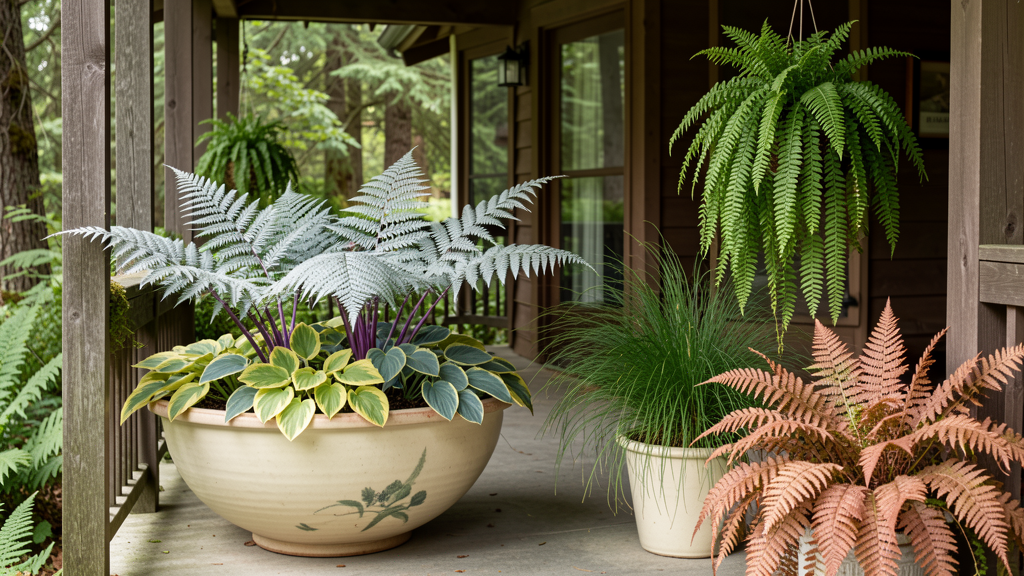
Ferns, hostas, caladiums, and impatiens — a lush shade garden for porches that never see direct sun.
Design Philosophy
A shaded porch is not a limitation — it’s an opportunity for a different kind of beauty. Ferns unfurl in graceful arcs, hostas spread their broad leaves like living sculpture, caladiums add color without needing direct sun.
Fern Bowl
A bowl of ferns and shade lovers at the doorstep — graceful fronds and broad leaves create a cool, tranquil entry.
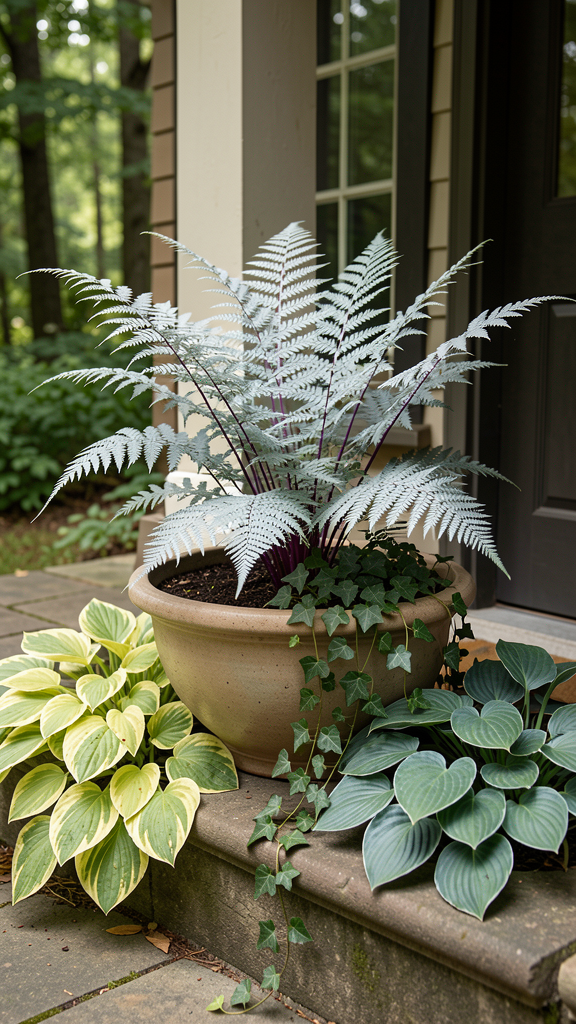
A wide ceramic bowl with Japanese painted fern as the thriller — silvery fronds with purple stems rise in an elegant spray. Chartreuse and blue-green hostas surround the base. Deep green creeping fig trails over the rim.
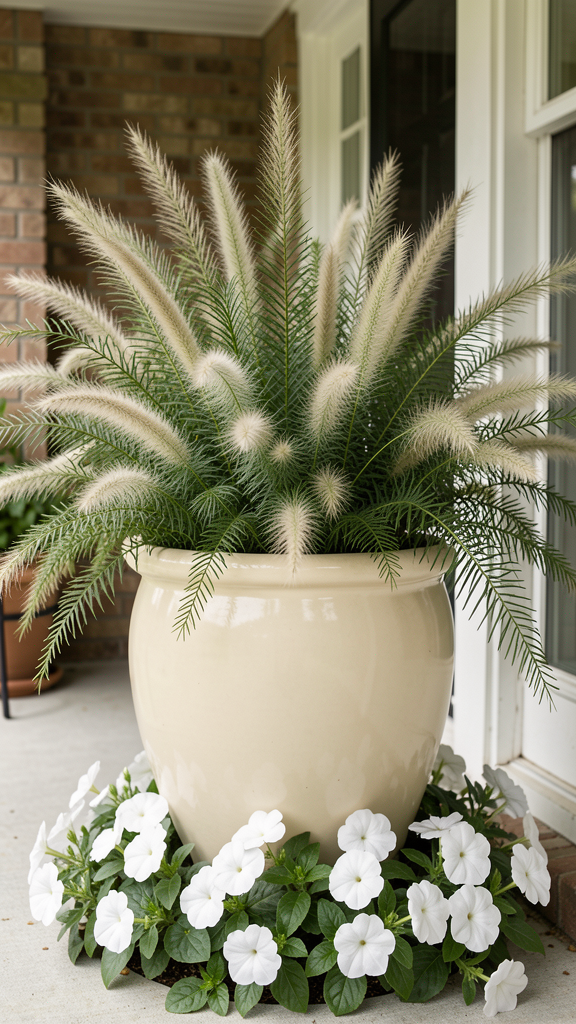
A cream glazed pot with foxtail fern — soft, fluffy stems that look like tiny pine needles. The texture is feathery and inviting. White impatiens at the base add cool color. The foam-like fern softens the pot’s lines.
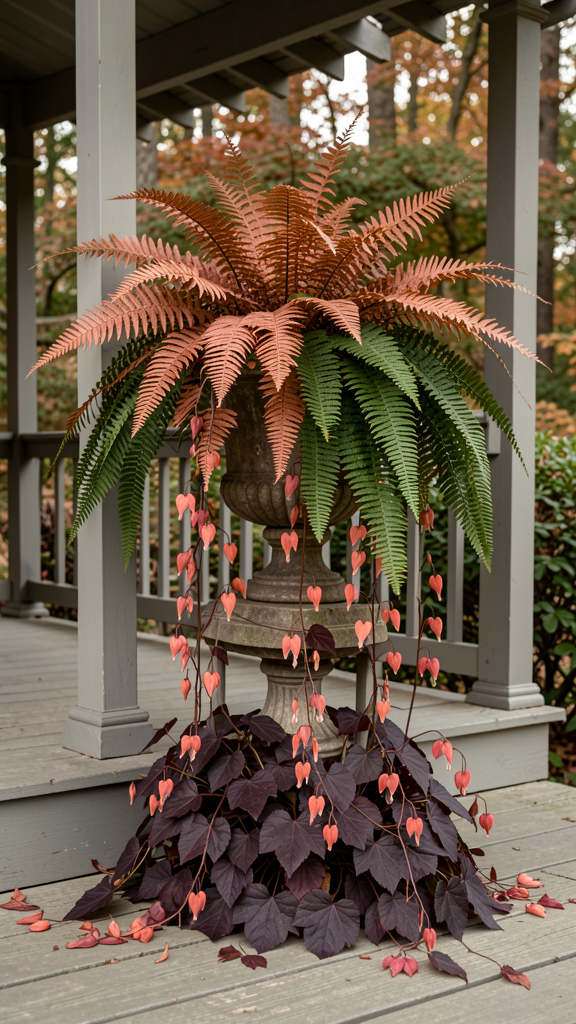
A tall urn with autumn fern — copper-pink new fronds mature to deep green. The seasonal color shift provides ongoing interest. Coral bells with dark purple foliage ring the base. Bleeding heart trails downward.
Shade Clusters
Grouped shade pots on steps and corners — hostas, ferns, and caladiums in layered compositions for shadowy corners.
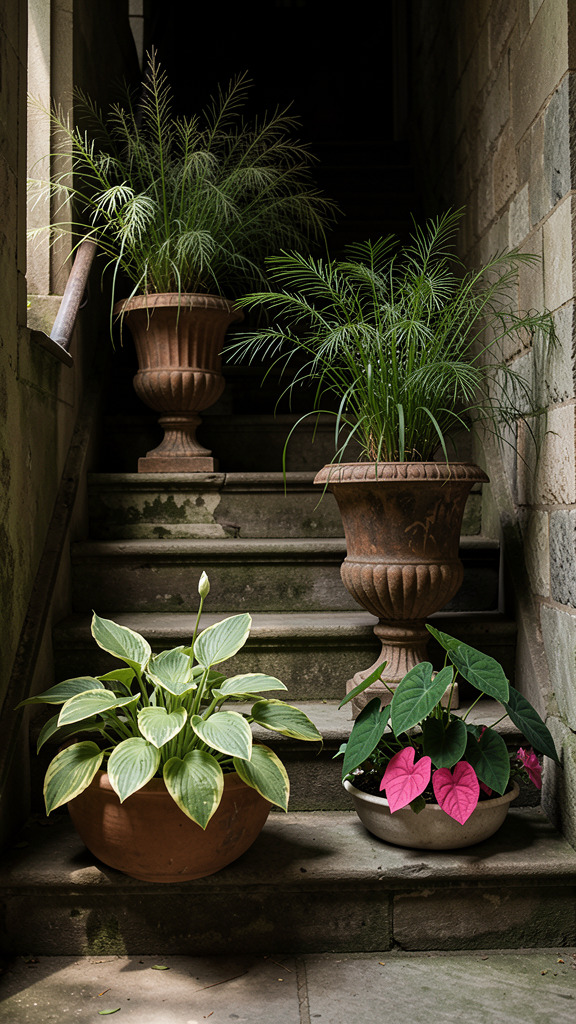
Three pots on covered steps: tall foxtail fern in a tall urn, medium hosta in a wide bowl, low caladium and impatiens in a shallow dish. Light green, dark green, and pink create depth in the shadowy stairwell.
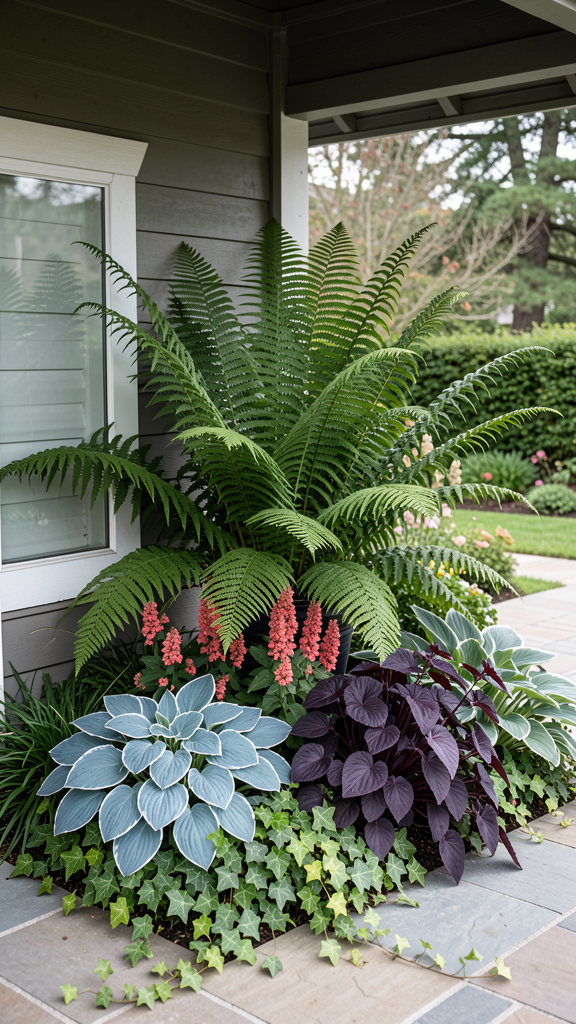
A corner cluster: tall Japanese painted fern, medium blue hosta, medium coral bells in dark purple, low trailing ivy. The variety of leaf shapes creates interest despite the limited color palette.
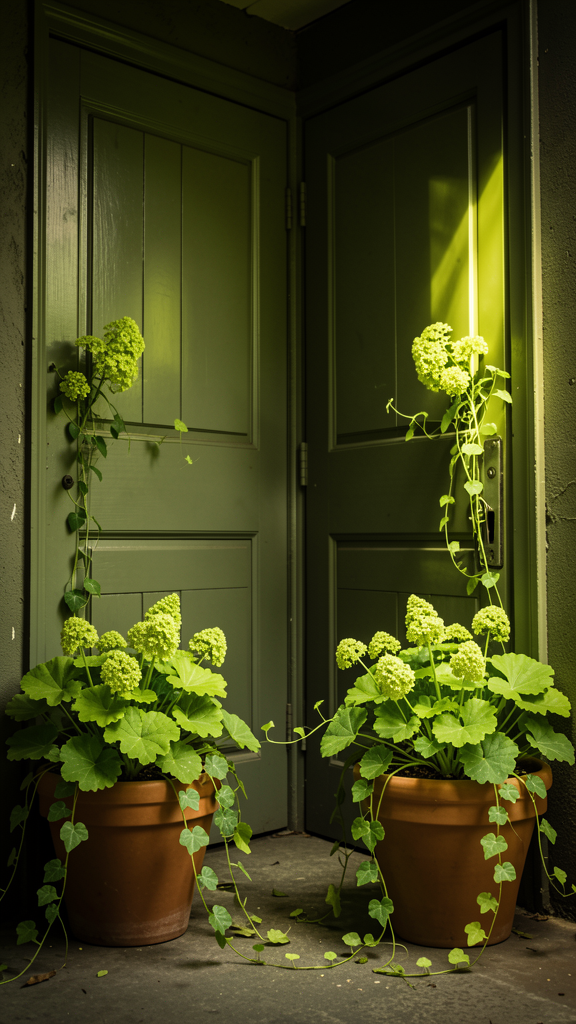
Matching pairs on either side of a shaded door: identical pots with heuchera in lime green and trailing vinca vine. The bright lime lights up a dark corner. Symmetry works in shade too.
Shade Vertical
Vertical shade gardens — wall planters and hanging baskets for ferns and trailing plants in low-light conditions.
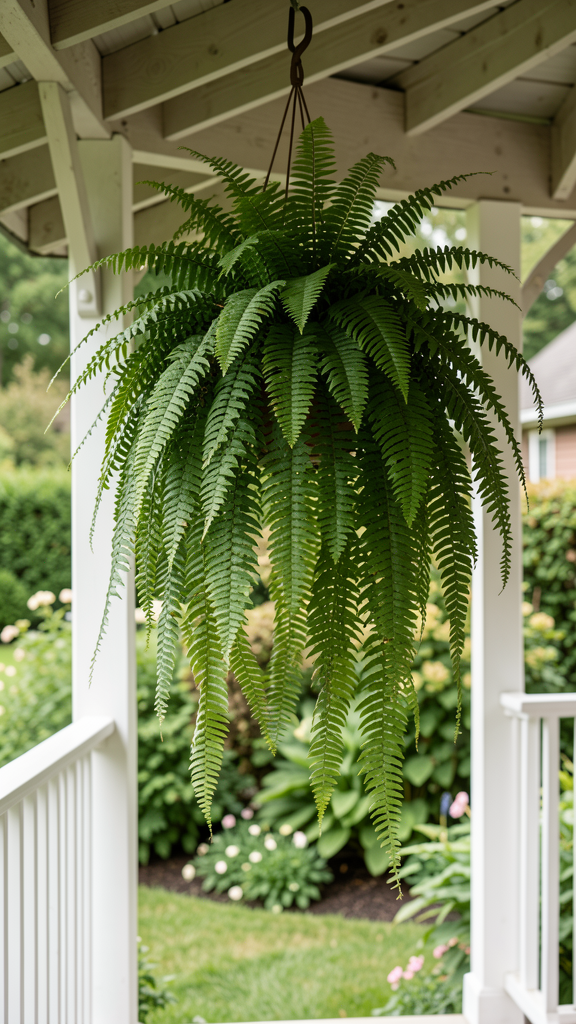
A hanging Boston fern on a covered porch — the classic shade hanging plant. Fronds cascade two feet down, creating a lush green curtain. Boston ferns thrive in indirect light and humidity. Water daily in summer.
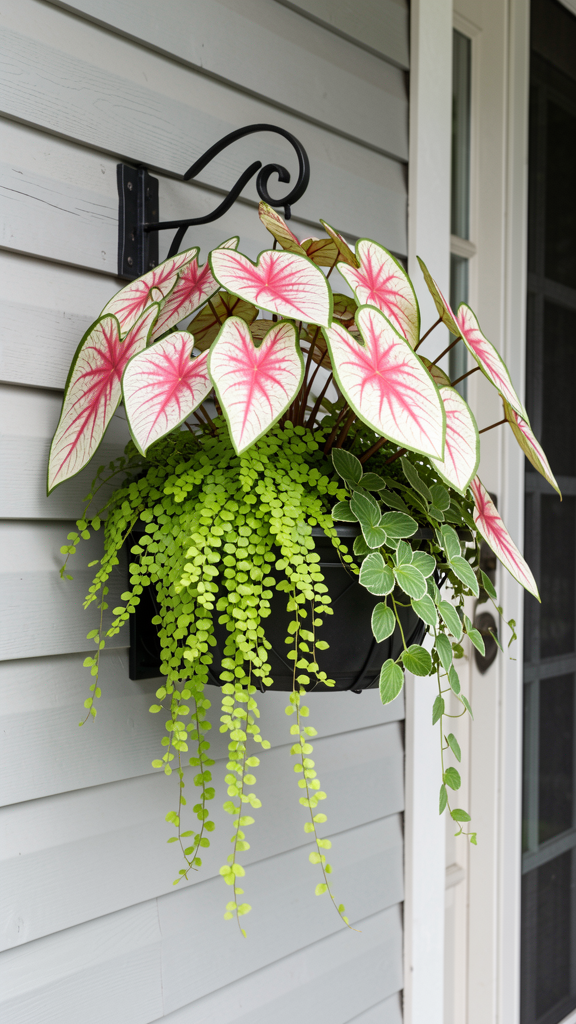
A wall-mounted shade planter with caladiums in pink and white, creeping jenny in chartreuse, and miniature hostas. The caladium’s heart-shaped leaves add tropical flair. Pink and white brighten the shaded wall.
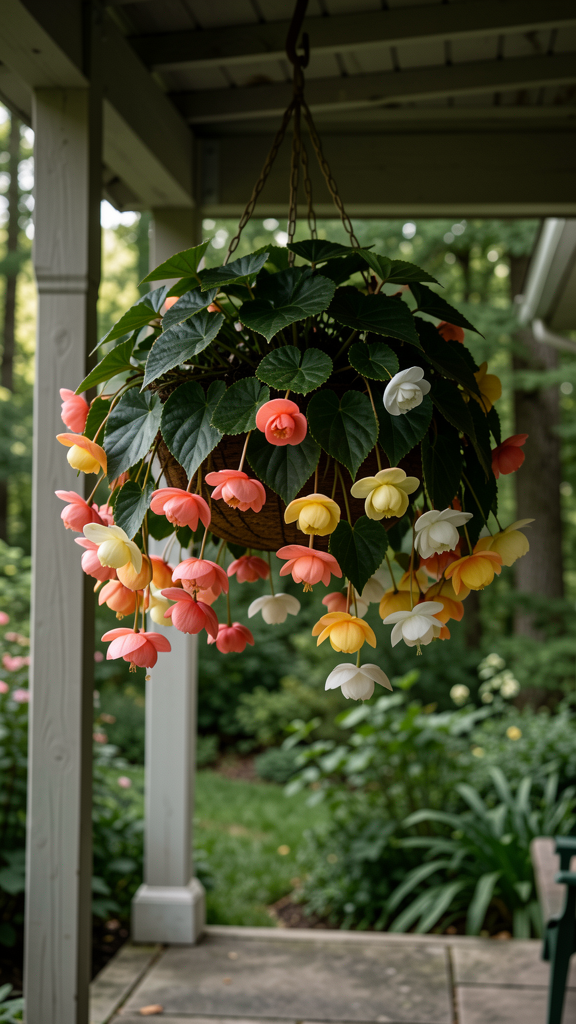
A hanging basket of tuberous begonias — pendulous blooms in coral pink, soft yellow, or white. The flowers hang beneath dark green leaves, visible at eye level. Best bloomers for deep shade.
Panorama
When ferns unfurl at the doorstep and hostas spread on the steps — your shaded porch becomes a cool, tranquil retreat.
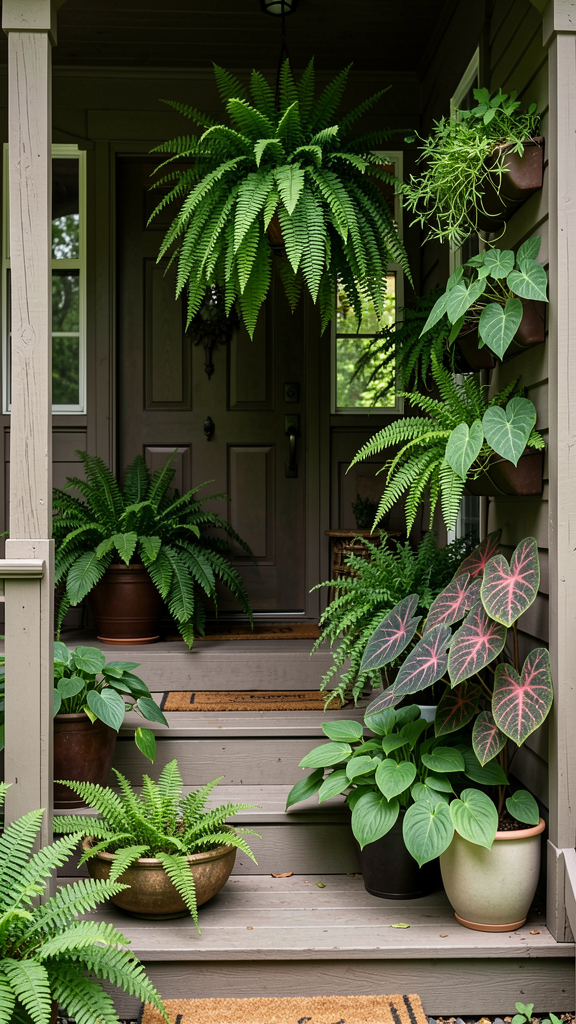
A fern bowl at the doorstep, hosta pots on the stairs, Boston fern hanging above, caladiums in wall planters. Layered greenery creates a lush, cool atmosphere. No sun needed, all beauty.
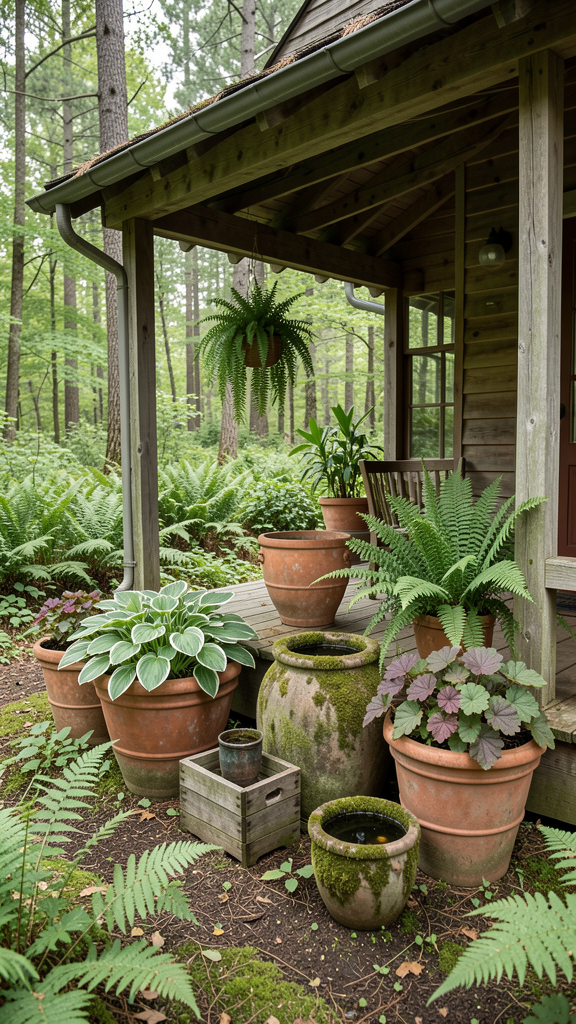
Woodland cottage: ferns, hostas, and heuchera in weathered terracotta and wooden containers. Moss-covered pots add forest floor feel. A small water feature completes the tranquil scene.
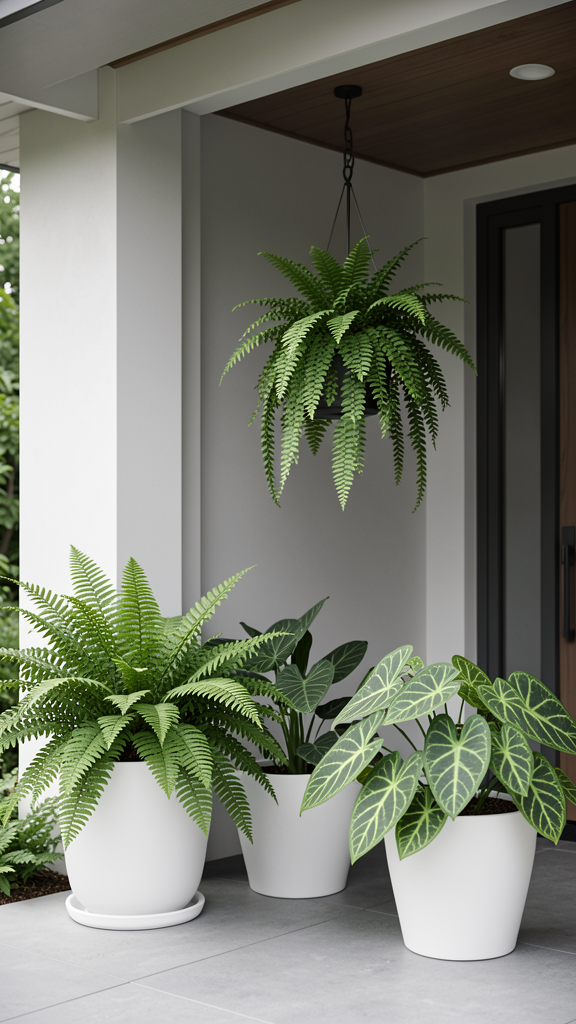
Modern shade: clean white pots with architectural ferns, geometric caladium arrangements, single hanging Boston fern. Modern lines contrast with lush organic growth. Shade suits minimalist design.
Plant Care
Keep your porch arrangement looking its best with these simple maintenance tips.
Watering
Shade pots retain moisture longer — water every 2-3 days instead of daily. Check soil moisture before watering. Ferns need consistent moisture; hostas tolerate some drought.
Light
All these plants thrive in indirect or dappled light. North-facing porches are ideal. Caladiums and impatiens will scorch in direct afternoon sun.
Pruning
Remove yellow or damaged fronds from ferns at the base. Cut hosta flower stalks after blooming. Pinch back impatiens for bushier growth. Divide hostas every 2-3 years.
Seasonal
Spring: plant after last frost. Summer: water and fertilize monthly. Fall: cut back ferns, bring caladiums indoors. Winter: move tender perennials to protected area.
FAQ
Best ferns for porch containers?
Boston fern (classic), autumn fern (copper-pink), Japanese painted fern (silver-purple), foxtail fern (fluffy), maidenhair fern (delicate). Choose based on your light level.
Can hostas grow in containers on a porch?
Yes — choose smaller varieties (Blue Mouse Ears, June, Patriot). Use pots at least 12 inches wide. Hostas need winter protection in zones below 7.
What shade plants add color?
Caladiums (pink, white, red), impatiens (pink, coral, white), tuberous begonias (large blooms), coleus (vibrant leaves), fuchsia (pendulous blooms).
How to brighten a dark porch?
Use lime-green plants: heuchera ‘Lime Rickey’, chartreuse creeping jenny. White flowers: impatiens, begonia, caladium. Light-colored pots reflect available light.
Do shade plants need fertilizer?
Use balanced liquid fertilizer monthly during growing season. Ferns are light feeders. Hostas and caladiums benefit from regular feeding. Stop in winter.
How close to the door can shade plants be?
As close as you like — no sun needed. Place ferns and hostas directly beside the door. Leave room for hostas to spread up to 2-3 feet wide.
Can I mix sun and shade plants?
Group sun plants together and shade plants together. Don’t mix in the same pot — watering and light needs differ too much.
How to deal with slugs on shade plants?
Use diatomaceous earth around pot rims, beer traps, or slug bait. Remove debris where slugs hide. Copper tape around pot rims deters them effectively.
Related
Download the Complete Design Checklist
Get a printable PDF with plant recommendations, container sizes, and a full maintenance calendar — ready for the garden center.