
This post contains affiliate links. As an Amazon Associate I earn from qualifying purchases.
Edible Companion Planting — A Porch Garden You Can Eat
Herbs, vegetables, and edible flowers in beautiful porch containers — a garden that feeds both the eyes and the kitchen.
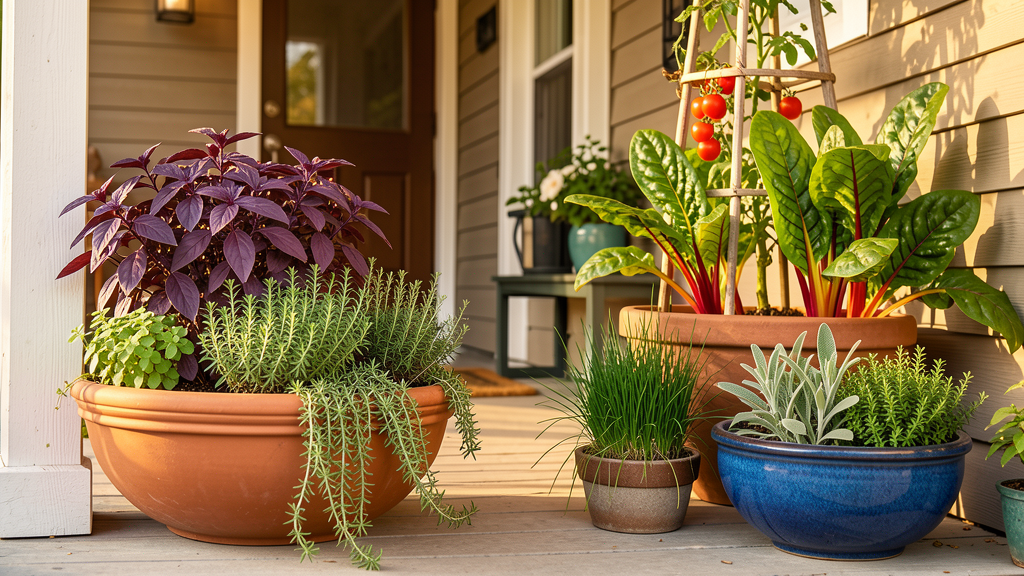
Design Philosophy
An edible porch garden proves that food plants are as ornamental as any flower. Purple basil, chartreuse oregano, red-veined sorrel, and trailing cherry tomatoes are gorgeous in their own right — and they produce dinner.
Herb Bowl
A bowl of culinary herbs at the doorstep — beautiful, fragrant, and ready to snip for dinner.
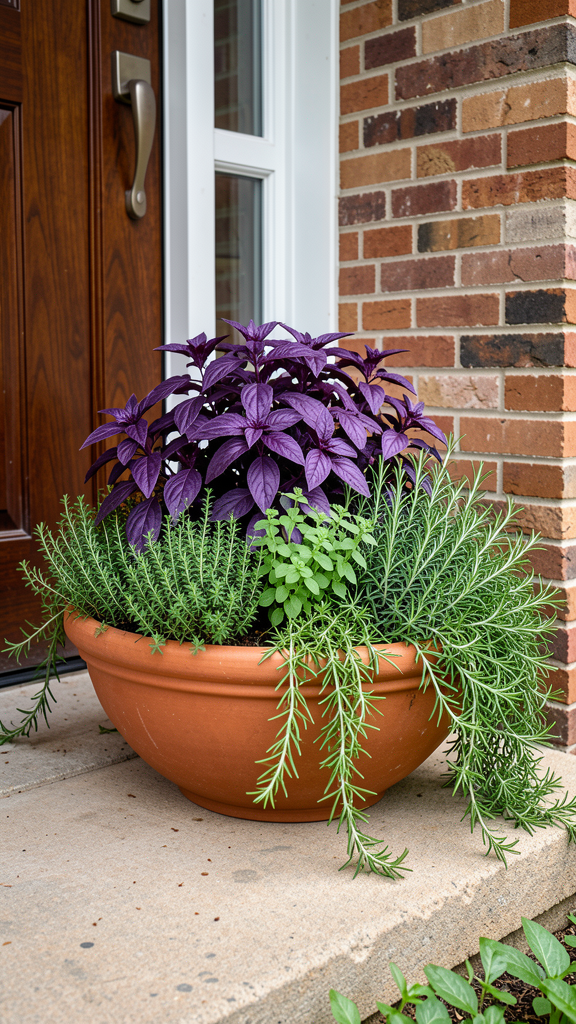
A wide terracotta bowl with purple basil as the thriller, oregano and thyme filling the middle, and trailing rosemary spilling over the rim. The purple-green palette is stunning, and every leaf is edible.
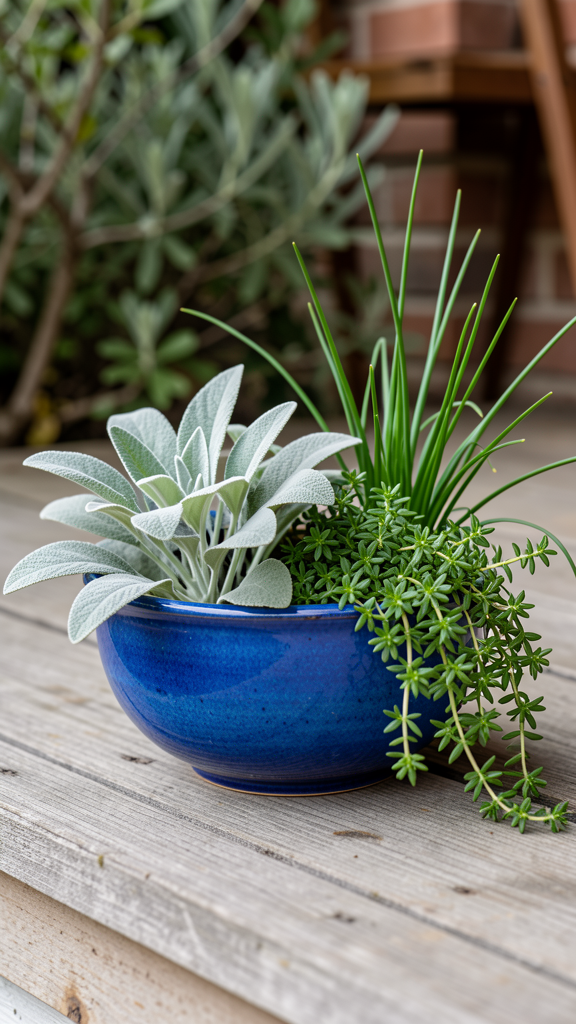
A blue ceramic bowl with sage, chives, and marjoram. Sage’s velvety gray-green leaves contrast with chives’ spiky green tubes. Marjoram trails gently over the edge. Covers roasts, salads, and soups.
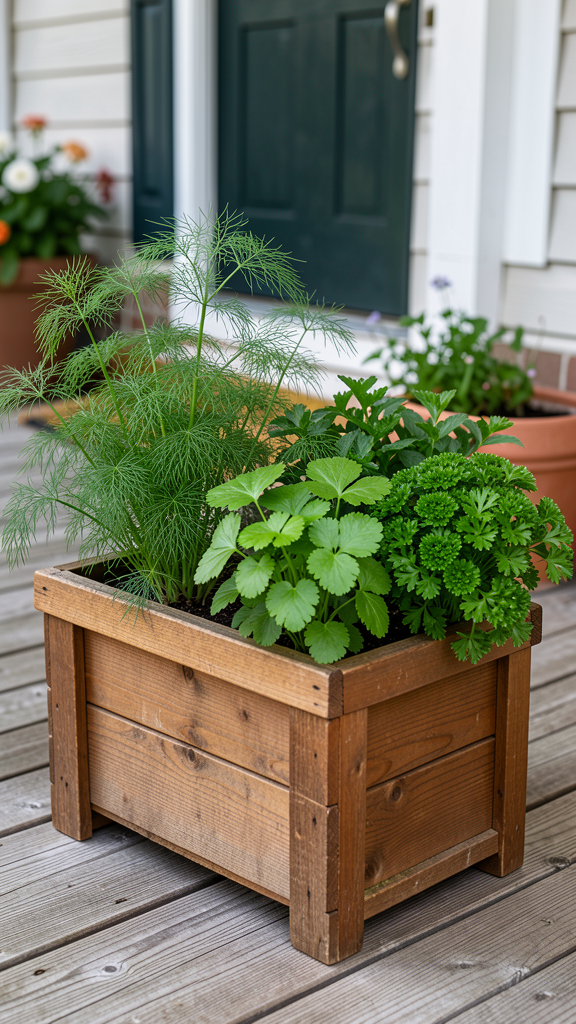
A wooden planter box with dill, cilantro, and parsley — three essential fresh herbs with distinct textures. Dill’s feathery fronds rise tall, cilantro’s flat leaves fill the middle, parsley curls carpet the base.
Edible Clusters
Grouped pots of vegetables and herbs — a productive mini-farm that looks as good as it tastes.
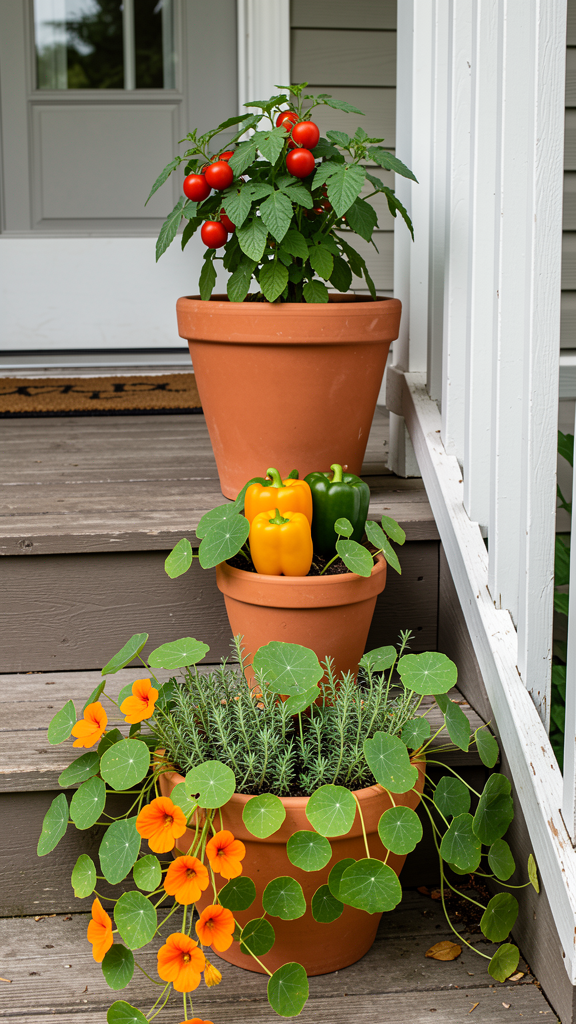
Three steps of edible pots: cherry tomato in a large pot on the top step (tallest), bell pepper in the middle, trailing nasturtium and thyme on the bottom step. A vertical edible garden on the stairs.
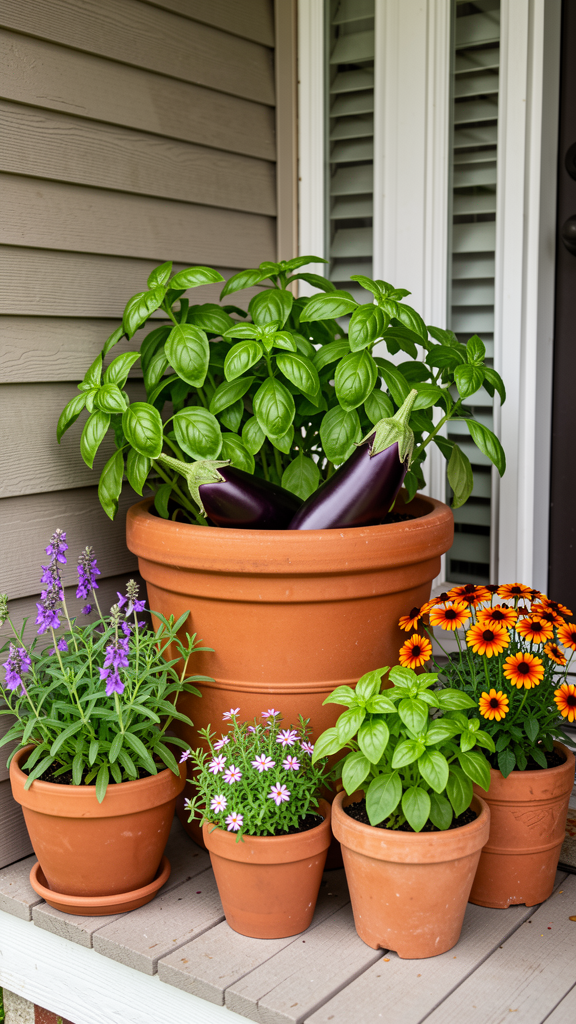
A corner cluster: eggplant in a large ceramic pot, basil and oregano in medium pots, calendula and borage in small pots at the base. The purple, green, and orange create an accidental color scheme.
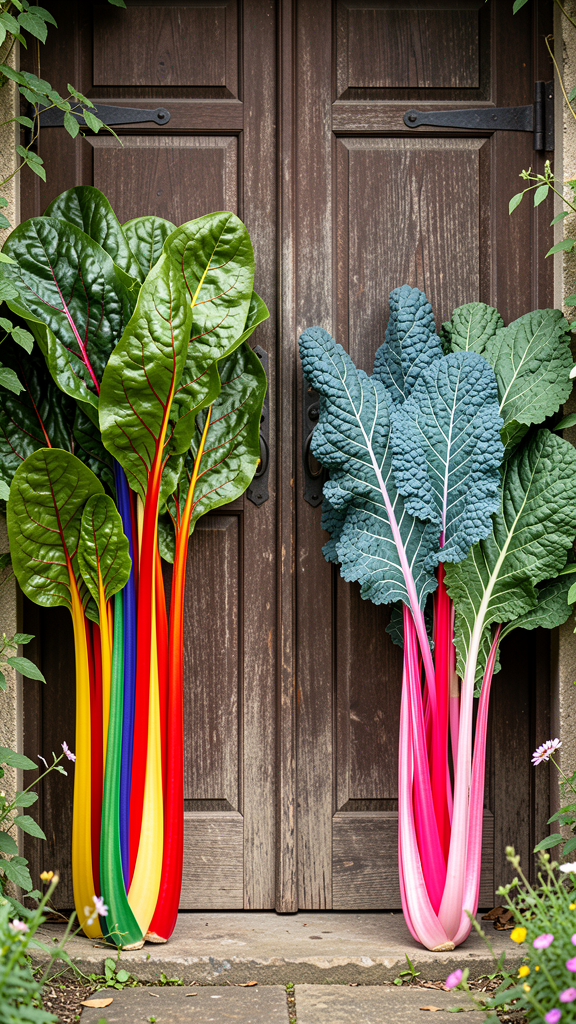
Matching pairs flanking the door: Swiss chard with rainbow stems on one side, Tuscan kale on the other. Bright red, yellow, and pink stems are as ornamental as any flower.
Vertical Edible
Vertical growing systems — trellises, hanging baskets, and wall planters — maximize edible production in small porch spaces.
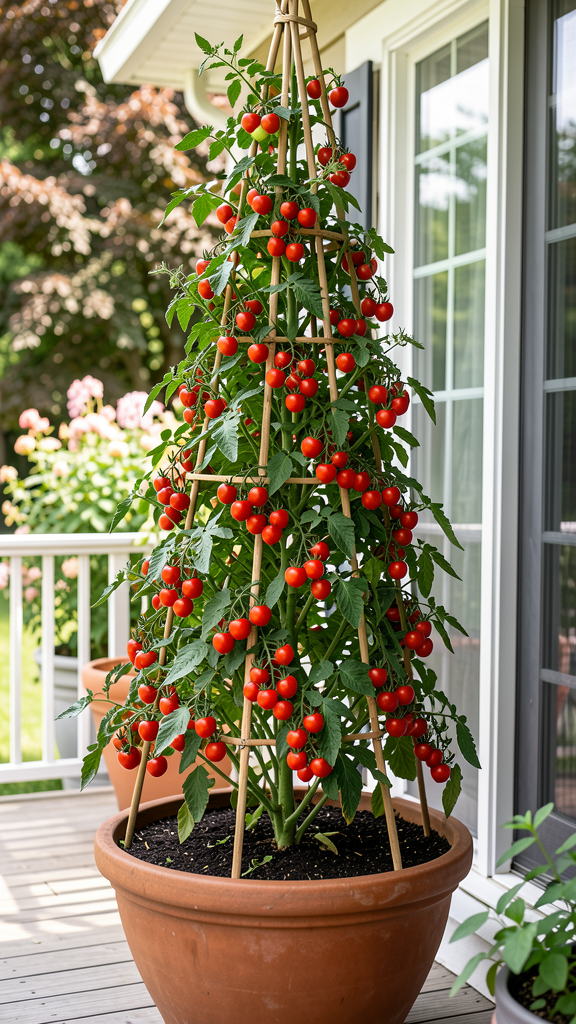
A cherry tomato growing up a tall cone trellis in a large pot. Train the main stem up and prune side shoots. By midsummer it reaches six feet, covered in red fruit. A productive living sculpture.
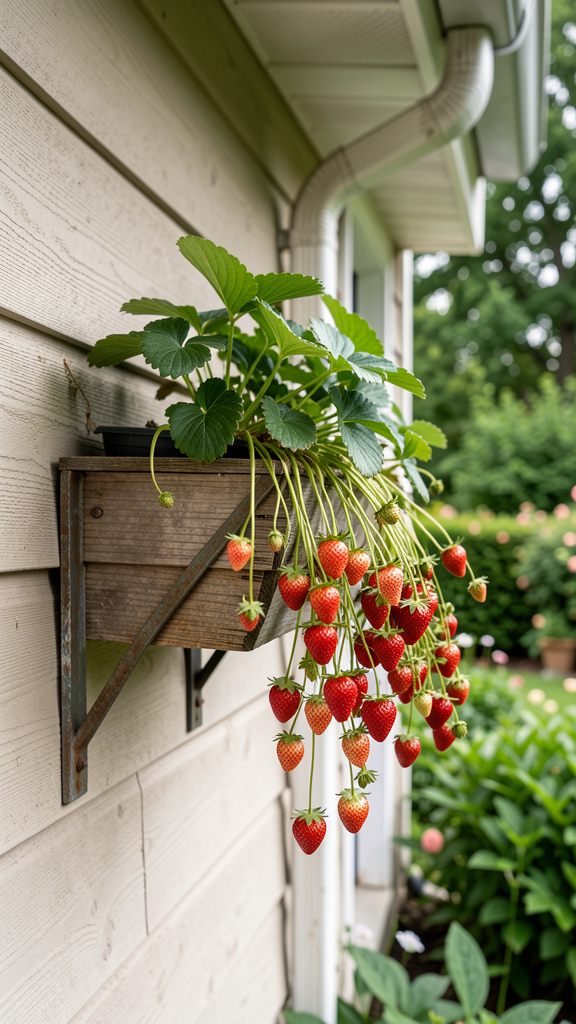
A wall-mounted gutter planter with trailing strawberries — the berries hang over the edge, visible and ripe for picking. Strawberries produce all summer with consistent watering.
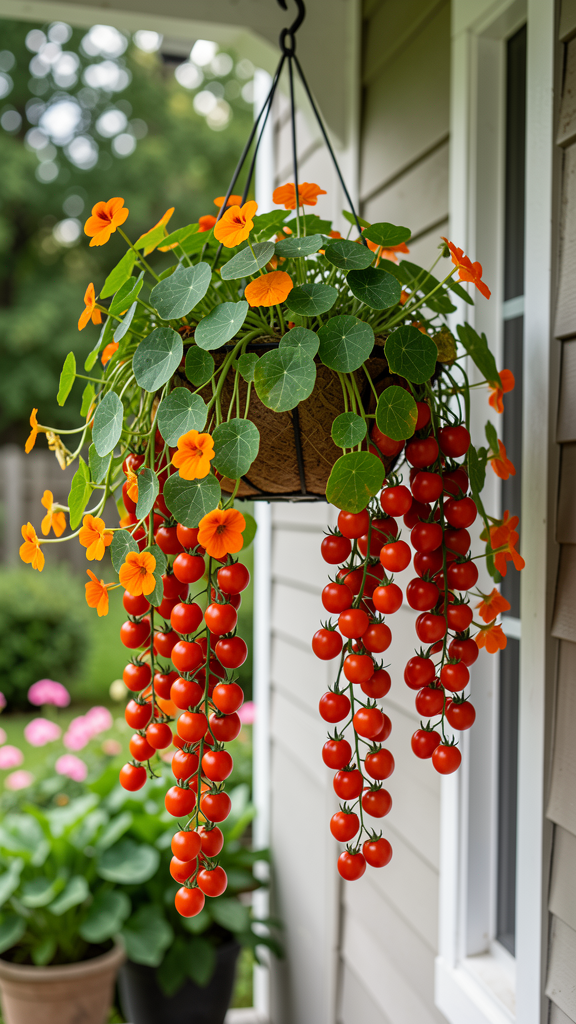
A hanging basket of trailing cherry tomatoes (Tumbler variety) — tomatoes cascade down like edible jewels. Plant with trailing nasturtium for color contrast. Pick breakfast tomatoes from the porch.
Panorama
When the herb bowl anchors the doorstep and edibles climb every surface — your porch becomes a productive kitchen garden.
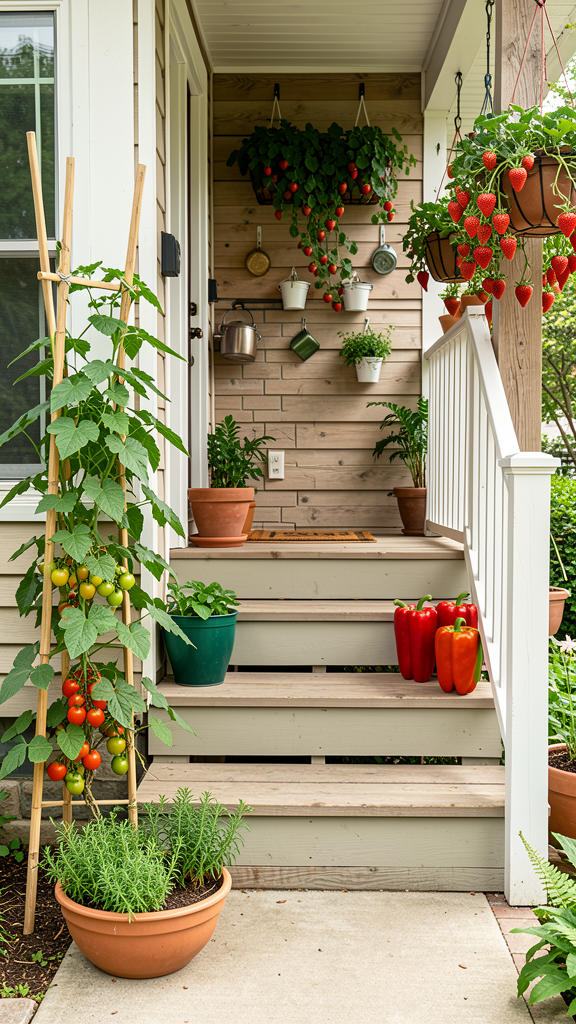
An herb bowl at the doorstep, tomato trellis on one side, pepper pots on the stairs, strawberry wall planter above. Pick salad ingredients without entering the house.
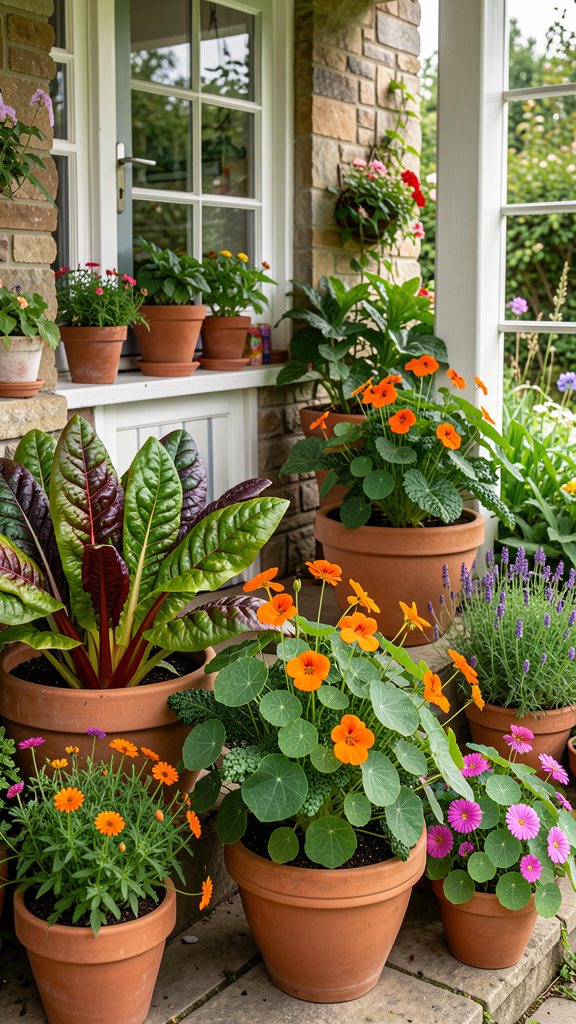
Cottage edible: mix of rainbow chard, kale, nasturtium, and calendula in assorted pots. Edible flowers garnish salads. Kale for smoothies. Beautiful and endlessly useful.
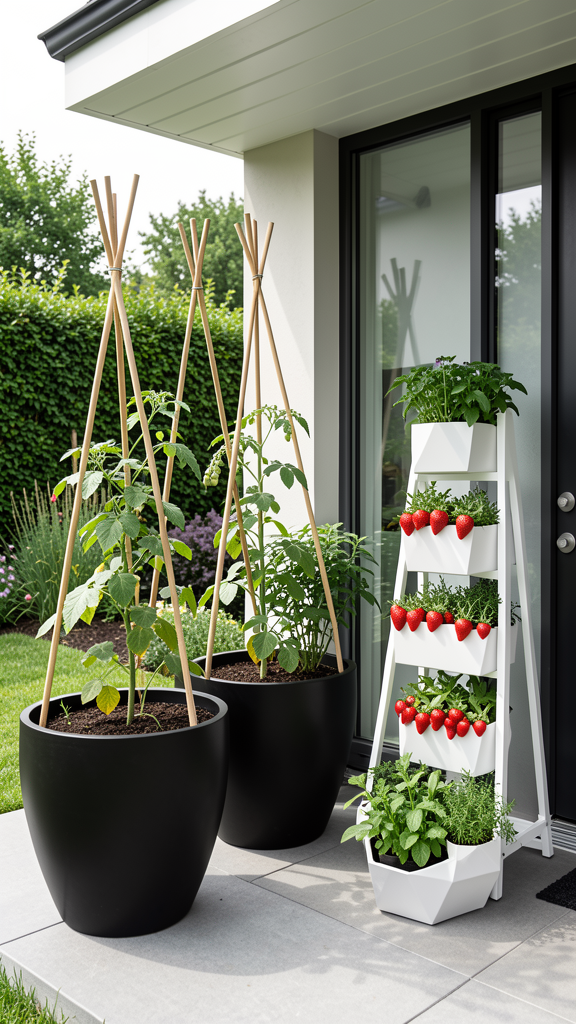
Modern edible: clean black ceramic pots with structural tomato cages, geometric herb planter, white strawberry tower. Clean lines contrast with the productive chaos of the plants.
Plant Care
Keep your porch arrangement looking its best with these simple maintenance tips.
Watering
Edibles need consistent moisture — water daily, twice in heat waves. Inconsistent watering causes blossom-end rot in tomatoes. Self-watering containers are ideal for busy gardeners.
Light
Most edibles need full sun (6-8 hours). Leafy greens tolerate partial shade. Fruiting plants (tomatoes, peppers, eggplant) need maximum sun for production.
Pruning
Prune tomato suckers for single-stem growth. Pinch basil tips for bushier plants. Harvest herbs regularly — the more you snip, the more they grow.
Seasonal
Spring: plant after last frost. Summer: daily water, harvest, fertilize weekly. Fall: extend season with row covers. Winter: bring herbs indoors to a sunny window.
FAQ
Best edibles for porch containers?
Cherry tomatoes, bell peppers, Swiss chard, kale, basil, oregano, thyme, chives, strawberries, and nasturtium. Choose compact or dwarf varieties for containers.
How big do edible pots need to be?
Tomatoes and peppers: minimum 14 inches wide and 12 inches deep. Herbs: 10-12 inches. Strawberries: 12-inch hanging baskets. Bigger pots = bigger harvests.
Can I grow tomatoes in a hanging basket?
Yes — choose trailing varieties like Tumbler or Tumbling Tom. They cascade beautifully and produce dozens of cherry tomatoes. Water daily as hanging baskets dry out fast.
What edible flowers can I grow?
Nasturtium (peppery), calendula (mild), borage (cucumber), pansies (sweet), and squash blossoms. All are edible and attract pollinators.
Do edible containers need special soil?
Use high-quality potting mix with compost added. Add slow-release organic fertilizer at planting time. Avoid garden soil — it compacts in containers.
How to deal with pests on edible plants?
Use neem oil for aphids. Companion planting deters many pests naturally. Attract beneficial insects with dill and fennel. Avoid chemical pesticides on edible plants.
Can I grow year-round edibles on the porch?
In zones 8+, yes with frost protection. In cooler zones, extend season with cold frames. Kale and chard survive light frosts. Bring herbs indoors for winter.
What companion pairs work best?
Tomato + basil (repels hornworms). Pepper + oregano (ground cover). Kale + nasturtium (traps aphids). Strawberry + thyme (deters slugs).
Related
Download the Complete Design Checklist
Get a printable PDF with plant recommendations, container sizes, and a full maintenance calendar — ready for the garden center.